Managing Blackleg in Canola
Tip #3: Manage Disease Pressures
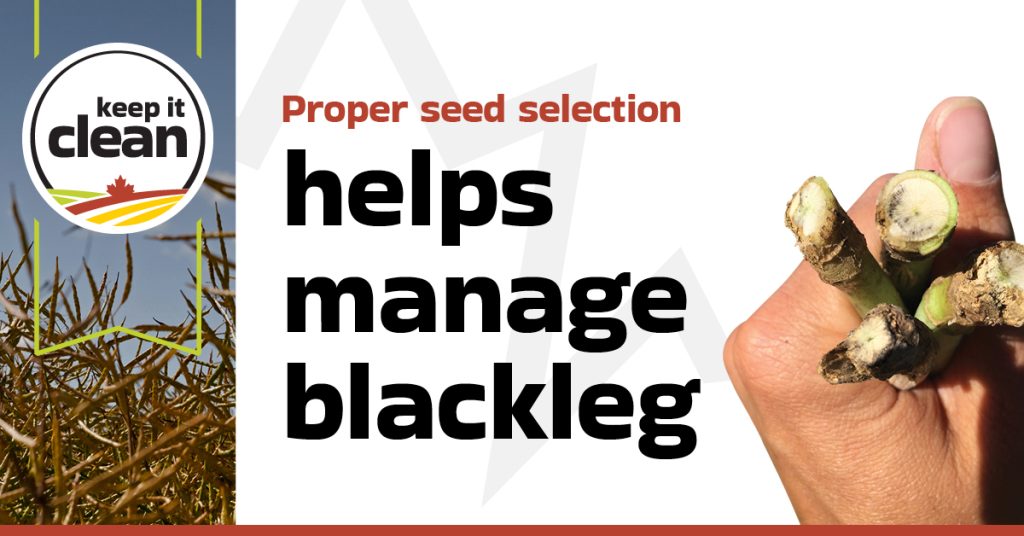
Blackleg is a fungal disease in canola that can cause yield and quality losses, impact profitability and may create a market risk. Effective blackleg management supports on-farm profitability and protects Canada’s reputation as a trusted supplier of high-quality canola.
To manage blackleg risk and preserve the effectiveness of genetic resistance, growers are encouraged to use an integrated blackleg management strategy rather than relying on a single tool.
Best practices for integrated blackleg management
Crop rotation
The blackleg pathogen overwinters on infected canola residue. Maintain a break between canola crops to allow residue to decompose and reduce disease carryover.
- A minimum two‑year break between canola crops is recommended
- Longer rotations further reduce pathogen pressure
Resistant varieties
Plant canola varieties with blackleg resistance that is effective in your field.
- Select varieties rated R (resistant)
- Rotate varieties over time to introduce different blackleg resistance genes and sources to the field
- Use blackleg race identification testing to identify predominant races in the field and help match appropriate major gene resistance
Field scouting and monitoring
Scout canola fields regularly to assess disease incidence and evaluate the effectiveness of your management plan. Monitoring helps guide future variety selection and rotation decisions.
Fungicide and seed treatment options
- Certain enhanced seed treatments can protect seedlings from early infection
- An early‑season foliar fungicide may reduce yield loss in higher‑risk situations
Managing alternate hosts
During non‑canola years, control volunteer canola and Brassica weeds such as stinkweed, shepherd’s purse wild mustard and flixweed. These hosts allow the blackleg pathogen to survive between crops.
Learn more about blackleg management in Canola Watch and the Canola Encyclopedia.
Pre‑harvest scouting for blackleg
Although blackleg symptoms can appear throughout the season, the optimal time to scout is just before swathing or around 60 percent seed colour change.
To scout for blackleg:
- Pull at least 50 plants in a W‑pattern across the field
- Clip the stem at the base or top of the root
- Examine the cross section for blackened tissue
Any black discolouration seen in the cross section can be compared to the disease severity scale below. Disease severity is rated from 0 (no discoloration) to 5 (completely discoloured). Each increase in severity rating is associated with yield loss. Stem samples can also be submitted to testing labs to identify blackleg races present in the field.

Use the Canola Council of Canada Blackleg Yield Loss Calculator to estimate yield impact and review available videos for additional scouting guidance.
FAQs
How does blackleg affect canola production?
Blackleg can reduce yield and quality, increase lodging and may create a market risk. Blackleg requires an integrated management strategy to minimize yield loss and maintain the effectiveness of genetic resistance in canola cultivars.
How can I manage blackleg risk?
You can manage blackleg by rotating crops, planting resistant varieties, rotating resistance genes, scouting fields managing volunteers, and using fungicides and enhanced seed treatments when risk is high.
What crop rotation practices reduce blackleg?
Maintaining at least a two‑year break between canola crops and extending rotations when possible reduces pathogen survival and disease pressure.
We’re all in
this together.
Do your part to protect the quality and reputation of Canadian crops and help keep markets open for all.
Follow the Keep it Clean 5 Tips to ensure your canola, cereals and pulses are ready for market.